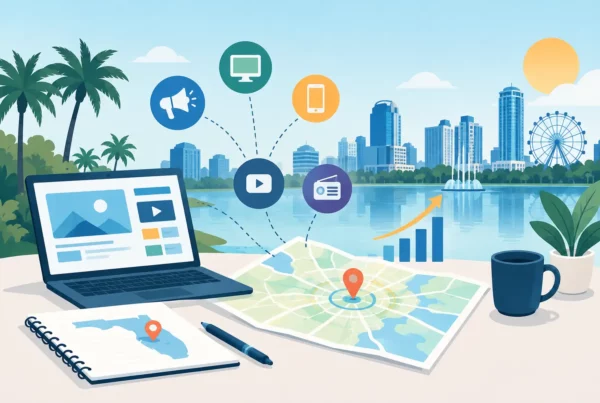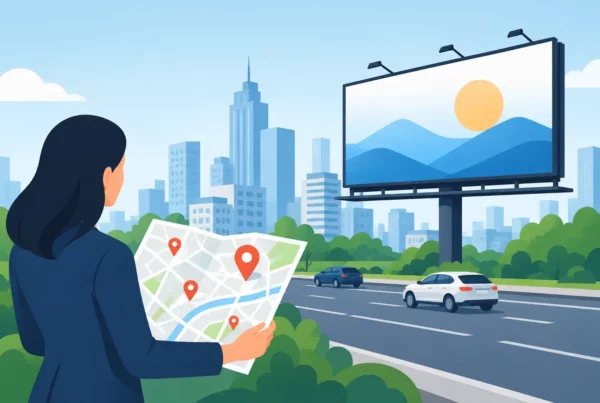


A billboard budget should do more than secure a sign. It should put your brand in front of the people most likely to buy, often enough to be remembered, and long enough to influence action. This outdoor campaign budgeting guide helps Central Florida businesses turn a media number into a practical plan for greater visibility, stronger recall, and measurable market presence.
Outdoor advertising is not a one-size-fits-all purchase. A restaurant opening near ChampionsGate, a healthcare provider serving Lakeland, and a national brand building awareness across Orlando may all use billboards, but their budgets should be built around different goals, routes, audiences, and campaign timelines. The right investment starts with those decisions, not a rate card.
Start With the Business Result You Need
Before assigning dollars to locations or production, define what the campaign needs to accomplish. Broad awareness, store traffic, a grand opening, a seasonal promotion, service-area growth, and support for a larger media campaign all call for a different approach.
A local business that needs to stay top of mind may benefit from a sustained presence near its service area. A business with a time-sensitive offer may place a larger share of its budget into high-traffic digital displays that can rotate timely messages. A regional brand entering several Central Florida markets may need multiple static or digital locations to establish coverage and frequency.
Set a realistic business objective, then connect it to a geographic priority. For example, a home services company may want daily visibility on the commuter routes leading into Orlando, while a tourism-focused attraction may prioritize visitors moving through Davenport or the corridors surrounding major destinations. Outdoor works best when the audience is not just large, but relevant to the sale.
The Outdoor Campaign Budgeting Guide: What to Include
A complete billboard budget has more than one line item. Media placement will typically be the largest investment, but overlooking creative, production, and campaign duration can make a promising campaign less effective.
Plan for these five areas:
- Media placement for the selected billboard locations and campaign period
- Creative development, including messaging, layout, and artwork
- Production for static vinyl or printed materials when required
- Installation and operational coordination
- A contingency for campaign extensions, creative updates, or added market coverage
The exact mix depends on the format. Digital billboard campaigns can offer flexibility because creative can be updated without printing and replacing a vinyl face. Static billboards provide continuous, exclusive visibility on a single display, which can be a powerful choice when a location closely matches your target audience. Neither format is automatically better. The best fit depends on your message, timing, desired frequency, and the roads your customers travel.
For first-time advertisers, a full-service partner can simplify this process. Orlando Outdoor can coordinate the creative, production, placement, and campaign details, helping businesses avoid the fragmented planning that can slow a launch or create unexpected costs.
Location Is a Budget Decision, Not Just a Map Pin
High traffic matters, but it is not the only measure of value. A billboard on a busy freeway may deliver major exposure, yet a location closer to your store, service territory, or competitor cluster may produce more useful attention. The goal is not simply to buy the largest audience. It is to buy the right audience in the places where your brand has a reason to be seen.
When evaluating locations, consider traffic direction, commuter patterns, proximity to retail centers, visibility distance, surrounding businesses, and the time drivers have to absorb your message. A display viewed by drivers approaching a decision point can be especially valuable. Think about the route someone takes before visiting your business, not only the address of the business itself.
Central Florida also has distinct audience patterns. Orlando roadways may combine residents, commuters, convention visitors, and tourists. Lakeland and Winter Haven can offer strong local and regional travel activity. Davenport can reach visitors and residents moving between attractions, lodging, and growing residential areas. Ocala and Sebring may call for a more targeted local-market strategy. Budgeting should reflect the market you need to own, not a generic statewide footprint.
Build for Frequency, Not a One-Time Impression
Billboard advertising earns its strength through repeated exposure. Consumers may not respond the first time they see a message. They may notice the brand on Monday, remember it on Wednesday, and search for it after seeing the same display again the following week.
That is why campaign length is one of the most important budget decisions. A short campaign can work for an event, limited-time promotion, or major opening. For ongoing brand awareness, a longer commitment usually gives the message more time to build recognition and trust. Stretching a limited budget across too many locations for too little time can reduce the frequency that makes outdoor media effective.
If budget is limited, it is often smarter to begin with one or two well-matched displays and run them long enough to create market presence. Once performance indicators and business results support expansion, add locations that extend reach into adjacent neighborhoods, commuter corridors, or nearby cities.
Give Creative a Real Place in the Budget
The best location cannot compensate for a cluttered billboard. Drivers have only seconds to understand your message, so billboard creative needs discipline. Reserve budget and planning time for an idea that can be read at speed.
A strong outdoor ad generally centers on one message, one brand identifier, and one clear next step. That may be a website, a short phone number, a memorable offer, or simply a brand name people can easily search later. Too much copy, multiple competing calls to action, and small visual details work against recall.
For a campaign serving several Central Florida markets, consider whether one message will work everywhere. A broad brand campaign may stay consistent across all displays. A business with multiple locations may need market-specific copy, directions, or offers. Digital boards make those updates easier, while static campaigns may call for a carefully planned versioning strategy.
Creative should also match the audience’s moment. A commuter-facing billboard can emphasize convenience, reliability, or a service that fits into a busy day. A tourism corridor may benefit from a simple, immediate reason to visit. The closer the message is to the viewer’s current need, the harder it is to ignore.
Compare Cost by Value, Not Price Alone
A lower-priced location is not always the better buy, and a premium display is not always necessary. Compare options based on who will see the sign, how often they are likely to see it, and how closely the location supports your business objective.
Media buyers often use impressions and cost per thousand impressions to compare outdoor opportunities. These are valuable planning measures because they connect price to estimated audience delivery. Still, they should not replace practical judgment. A board with fewer impressions near your highest-value customers can outperform a board with a larger but less relevant audience.
Ask how each option fits the campaign as a whole. Does it build reach in a new area? Does it reinforce another board on a major travel route? Does it place your brand near a key retail district, office center, or destination? The best plan creates coverage with purpose rather than collecting locations at random.
Plan Measurement Before the Campaign Launches
Outdoor advertising can support direct and indirect results, but you need a baseline to see the difference. Before the campaign begins, record the measures that matter to your business: website traffic, branded search activity, calls, leads, foot traffic, store sales, appointment volume, or promotional code use.
A billboard does not need a complicated message to be measurable. Use a dedicated landing page, a trackable phone number, a short memorable URL, or a market-specific offer when direct response is a priority. For brand campaigns, watch for lift in branded searches, direct website visits, and improved sales trends in the areas receiving outdoor coverage.
Keep expectations aligned with the role of the medium. Outdoor often creates demand before a person clicks, calls, or visits. It strengthens the performance of search, social, radio, streaming, and other media by making the brand familiar when consumers encounter it again. That carryover value is a major reason billboards belong in an integrated marketing budget.
Make Room for Smart Adjustments
Your first budget should be a starting point, not a permanent rule. Review results against the campaign objective and look for practical opportunities: extending a high-performing location, adding coverage near a new store, refreshing creative after a seasonal shift, or moving investment toward a stronger corridor.
The strongest outdoor campaigns are built with enough focus to make an impact and enough flexibility to respond to what the market is telling you. Choose the roads your customers already travel, give them a message they can absorb in seconds, and allow enough time for your brand to become the familiar choice.