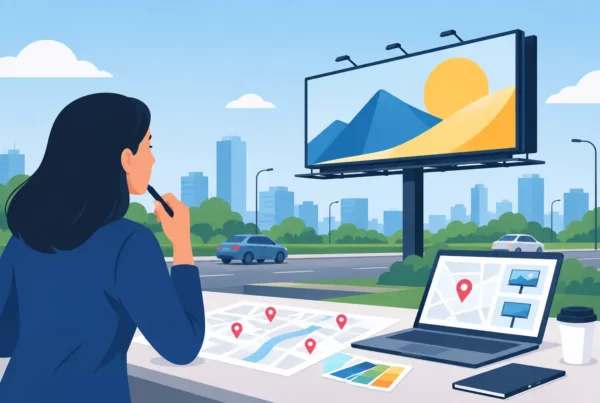
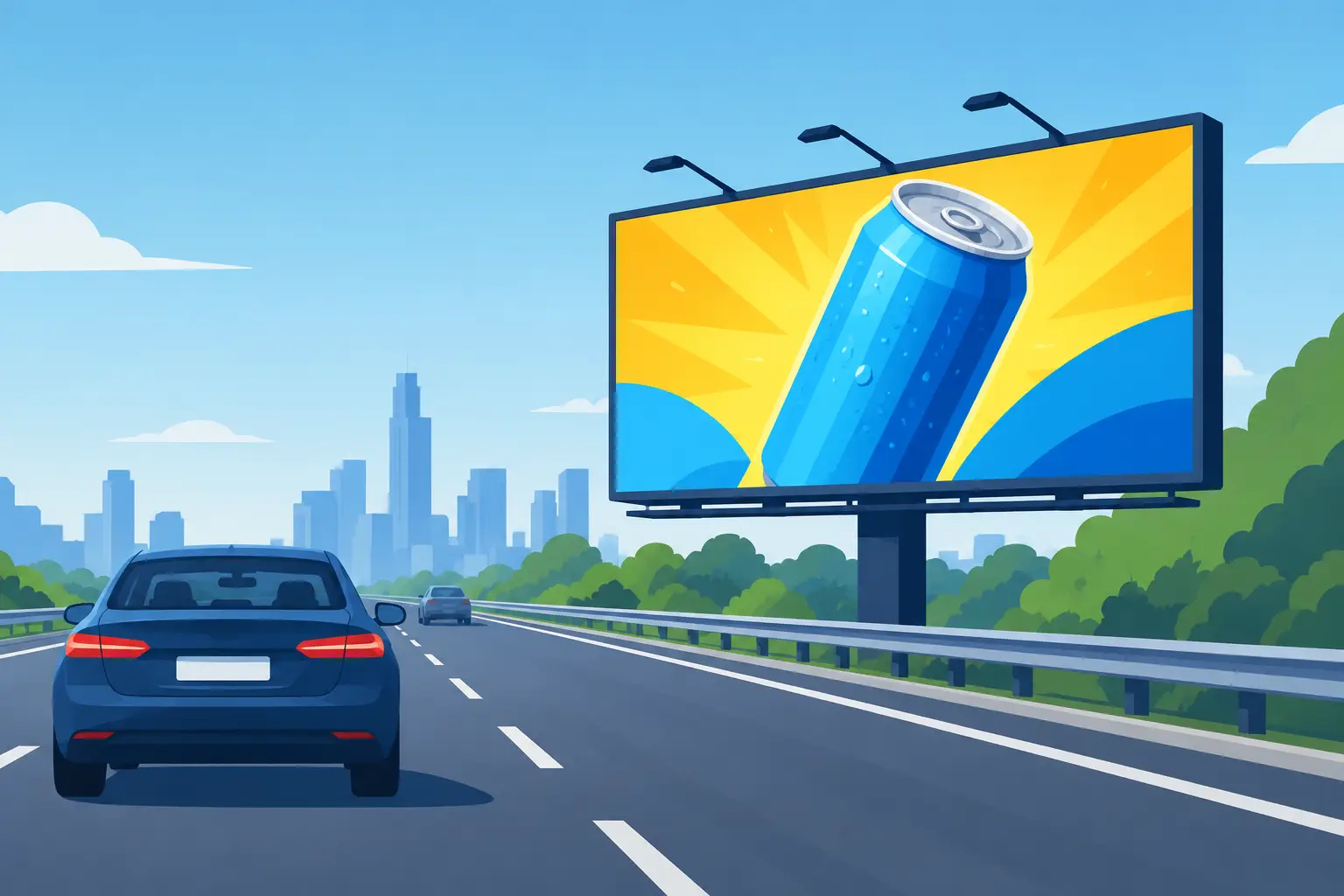

A driver passing your billboard at 55 mph will not stop to study your offer. They will not read a paragraph, compare fine print, or decode a clever slogan that takes two passes to understand. They will give your message a few seconds at most. That is exactly what makes billboard copy memorable: a clear idea, delivered fast enough to stick after the vehicle has moved on.
For businesses competing across Central Florida, memorable copy turns a high-traffic display into more than a logo on the roadside. It gives commuters, shoppers, tourists, and local customers a reason to remember your name when they need what you sell.
What Makes Billboard Copy Memorable?
Memorable billboard copy is not simply short copy. It is copy that creates immediate recognition and leaves behind one useful thought: a need, a benefit, a brand name, a location, or a next step. The best boards feel effortless to read because every word has a job.
That standard changes the way a campaign should be written. A billboard is not a brochure, a search ad, or a social post. It is a high-frequency brand message built for motion, distance, and repeat exposure. The goal is not to explain everything your company does. The goal is to make the right audience remember you first.
A strong message often follows a simple formula: identify the audience’s need, state a specific benefit, and make the brand easy to recognize. A home services company might lead with “AC Out? We’re On It.” A restaurant may put one craveable item and a simple location cue front and center. A personal injury firm could use a confident, relevant promise that reinforces its name.
The right approach depends on your category and campaign goal. A newer business may need to prioritize name recognition. An established brand running near a store or service area may benefit from a direct action message. Both can work, but trying to accomplish both goals with too many words usually weakens the board.
Start With One Message, Not Every Message
The most common billboard copy mistake is asking one display to carry an entire marketing plan. Business owners understandably want to mention every service, every credential, every special offer, a website, phone number, and several locations. On a billboard, that creates visual competition instead of recall.
Choose the one thing a driver should retain. It might be a benefit such as faster service, a product category, a limited-time offer, or a distinctive brand position. Then support it with only the details needed to make that claim believable and actionable.
Consider the difference between “Family Dentistry, Invisalign, Implants, Cleanings, Whitening, Emergencies, Four Locations” and “Smile Confidently.” The first may describe the practice, but the second creates a quick emotional impression. The brand, location, and a short call to action can do the supporting work.
This does not mean every billboard needs to be vague. Specificity is powerful when it can be understood in one glance. “Oil Changes in 15 Minutes” is more memorable than “Complete Automotive Services.” “Free Same-Day Estimates” gives a roofing company a clear point of difference. Strong copy makes one promise easy to repeat.
Write for the road, not the conference room
Copy can sound impressive in a planning meeting and still fail on a busy roadway. Internal teams may favor industry language, clever wordplay, or detailed descriptions because they already understand the business. Drivers do not have that context.
Use familiar words. Favor active language. Read the headline out loud, then imagine seeing it from several hundred feet away through traffic, weather, and competing signs. If the message needs explanation, simplify it.
A good test is the five-second rule: Can a person understand the headline, connect it to the brand, and know the basic benefit in about five seconds? If not, the idea likely needs another round of editing.
Make the Brand Part of the Memory
A funny line may earn a smile, but it is not a successful billboard if people cannot remember who said it. The brand must be integrated into the message, not treated as an afterthought squeezed into the corner.
That starts with a recognizable logo, consistent colors, and a readable company name. It also means the headline should fit the brand’s personality. A bold, direct message may suit a contractor, legal practice, or auto dealer. A polished, aspirational line may make more sense for a health care, hospitality, or luxury retail brand.
Consistency matters even more over time. When a campaign appears across Orlando, Lakeland, Winter Haven, Ocala, Davenport, or Sebring, repeated visual cues help audiences connect separate impressions into one brand memory. The same color palette, voice, product image, and positioning can make each location work harder.
There is a trade-off here. A highly creative execution can attract attention, while a familiar branded execution can build faster recognition. The strongest campaigns usually balance both: a fresh message that still looks unmistakably like the business behind it.
Let Design Give Copy Room to Work
Copy and design are not separate decisions. A short headline can still disappear if it is placed over a busy photo, set in a thin font, or surrounded by too many competing elements. Conversely, a simple, high-contrast layout can make a few words feel bigger and more confident.
Use contrast so the message can be read quickly in changing daylight. Give the headline generous open space. Select images that communicate one idea rather than requiring interpretation. If a product photo is central to the message, make it large enough to recognize immediately.
Digital billboards bring additional flexibility, but they do not change the core rule. Each creative rotation should stand on its own. Do not assume a driver will see every frame or wait for the next message. A clean digital display with one memorable message is usually more effective than a sequence that depends on a full story.
Numbers, offers, and calls to action
Numbers can be memorable because they give a claim shape. “2 for $5,” “24/7,” and “15-Minute Appointments” are easy to process when they are large, relevant, and supported by the brand. But a price or promotion should not crowd out the message itself.
Calls to action should also match the viewing environment. Asking drivers to visit a nearby location, remember a short website, or search for the brand later can work well. Long URLs, tiny QR codes, and dense instructions often do not. A QR code may be useful in a pedestrian-heavy setting, but it should never be the only way the audience can respond.
For location-driven businesses, a directional cue can be especially effective. “Next Exit,” “3 Miles Ahead,” or a recognizable neighborhood reference can turn awareness into an immediate visit. For brands focused on broader market visibility, a simple name-and-benefit message may deliver greater long-term value.
Build Recall Through Repetition and Relevance
No single billboard impression has to carry the entire campaign. Outdoor advertising gains strength from repeated exposure. A commuter who sees the same clear message several times a week begins to recognize the brand without effort. That familiarity can become the deciding advantage when a need arises.
Repetition works best when the message is relevant to the road and audience around it. A tourism offer may perform well near visitor corridors. A local medical provider may benefit from boards close to growing residential areas. A franchise brand may use market-wide coverage to support multiple locations while keeping its creative consistent.
This is why copy development should begin with the campaign’s objective and location strategy. The right words for a freeway audience may differ from the right words near retail, entertainment, or neighborhood routes. Placement creates the opportunity. Clear copy makes that opportunity memorable.
Give the Big Idea Time to Prove Itself
Brands sometimes change outdoor creative too quickly because the message feels familiar to the people who approved it. The audience is not seeing it from inside the marketing department. They are encountering it between school drop-off, errands, work commutes, and weekend plans.
Keep a strong message in market long enough to build recognition, then refresh it when the offer changes, the season shifts, or performance goals call for a new angle. The best campaign evolution preserves the elements people already recognize while giving them a new reason to pay attention.
At Orlando Outdoor, that thinking shapes the work beyond placement. A billboard campaign is strongest when location, message, design, production, and timing support one clear business goal. The result is not just more impressions. It is a message people can recall when they are ready to buy.
Before approving your next board, ask one practical question: if a driver remembers only five words from it tomorrow, will those five words lead them back to your business? Start there, and let every design choice earn its place.